
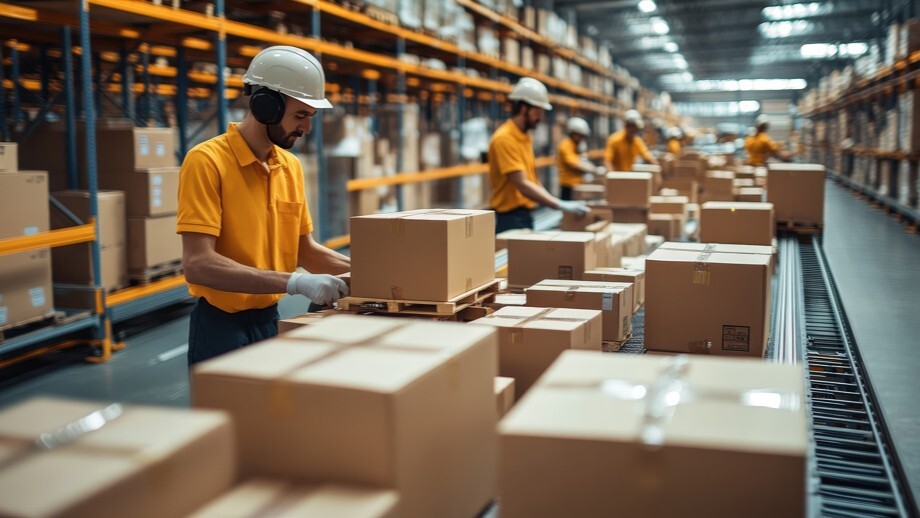
Most 3PLs don't decide to expand. They get forced into it, usually a few months later than they should have. The warehouse that felt spacious two years ago starts working against the business quietly, long before anyone puts "find new space" on the agenda.
Here are five signs it's already happened to you.
1. You're Renting Off-Site Storage to Make Room
If you've started leasing a secondary storage unit, trailer, or overflow space just to hold inventory that doesn't fit your primary facility, you're not solving a space problem. You're adding a second, less efficient facility to your operation without the systems to run it well. That overflow space is a symptom, not a solution.
2. Order Accuracy Is Drifting, Without an Obvious Cause
When a warehouse gets too dense, small errors compound. Pickers walk further, aisles get congested, and inventory gets shuffled into whatever spot is open rather than where it should logically live. If your error rate has crept up over the last two or three quarters and nothing in your process changed, cramped space is a likely culprit, even if nobody's named it yet.
3. Peak Season Takes Longer to Recover From Each Year
A little slowdown during a major volume spike is normal. What's not normal is taking two or three extra weeks after peak season to work through a backlog that used to clear in days. If your recovery time is getting longer year over year even as your systems and staffing improve, your facility's physical capacity, not your operations, is the constraint.
4. You're Turning Down Business You Want
This is the sign that costs the most and gets talked about the least. If you've said no, or quietly slow-walked, a new client opportunity because you weren't confident you could handle the volume in your current footprint, that's not caution. That's a capacity ceiling actively limiting your revenue.
5. Your Racking and Layout Have Been "Optimized" More Than Once
A single layout optimization is smart operations. A third or fourth reconfiguration in eighteen months, squeezing narrower aisles, taller stacking, or creative use of dead space, is usually a sign you've extracted most of the efficiency the building can give you. At some point, the building itself becomes the bottleneck no layout change can fix.
The Lease Timeline Makes This Worse
Even once an operator decides to move, industrial real estate doesn't move at the speed of a business decision. Finding the right building, negotiating terms, securing tenant improvements, and completing a buildout realistically takes six months to a year in most markets, longer for larger or more specialized facilities. If you wait until capacity pain is undeniable to start that process, you're often looking at another full peak season, sometimes two, inside a building that's already working against you before the new space is ready.
That timeline is exactly why the signs above matter. They're not just diagnostic, they're a countdown. The earlier you recognize them, the more runway you have to execute a move on your terms instead of under pressure.
Why Operators Wait Too Long
Expansion feels like a distraction from the business. It means touring buildings, negotiating a lease, and managing a transition, all while still running daily operations. So most 3PLs wait until the pain is undeniable, which is usually months after it became a real problem, and means starting the real estate search under time pressure instead of strategy.
What Next?
If two or more of these signs sound familiar, the conversation about your next facility should start now, not after peak season proves the point again. Growe represents 3PLs exclusively in real estate negotiations, and we don't get paid unless you do, at no cost to you.
Talk to Growe about what your next warehouse, and your next lease, should actually look like.

Stay ahead in logistics
Get insights, strategies, and exclusive content delivered straight to your inbox
Client stories
Real experiences from brands who transformed their logistics strategy
More insights from our experts
Explore our latest thoughts on logistics and growth strategies
Multi-Market Expansion: How 3PLs Should Choose Their Next City

Why Dallas-Fort Worth Is Becoming the Nerve Center of America's Supply Chain
The Real Cost of a Mismatched 3PL-Brand Partnership (and How to Avoid One)
Your 3PL is Either Too Big to Care or Too Small to Scale
.jpg)
The Best Warehouse Space Never Hits the Market